Top Digital Marketing Strategies

Digital Marketing Agency Johannesburg

With many people having access to internet and mobile phones, you’ve probably figured out that a digital marketing agency in Johannesburg is critical for the long-term success of your business. But what exactly is digital marketing, and how do you do it?

What Is Digital Marketing?

In the old days, businesses could only promote themselves through billboards, television spots, direct mail, or store window displays. As we operate in the online world, marketing and advertising have moved online, too. Marketers can now reach their target audience via digital channels such as social media, search engines, websites, text messages, and email, and these comprise what we think of as digital marketing or online marketing.

Why You Need Digital Marketing Agency in Johannesburg

Though the traditional channels are still in play, the digital marketing world offers several benefits:

  • With online marketing you can reach global audiences. 
  • Personalization allows you to target and segment more effectively.
  • Efficiency and automation let you do more with less marketing budget, even with a small marketing team.
  • Your brand can attain greater visibility across digital channels.
  • Software makes adopting digital marketing strategies faster and easier.
  • You can communicate with customers more rapidly and frequently.
  • Data collection and analysis enables your business to make better decisions.
  • Online marketing strategy can be changed as the digital landscape changes.

Different Kinds of Digital Marketing

To stand out from your competition, you need a diversified digital marketing strategy. Embracing different forms of marketing techniques, leverages the impact of more engagement and leads. Depending on your target audience, some of the techniques that need consideration are as follows:

Digital Marketing Agency Johannesburg

Social Media

Paid Advertising (e.g. Google Adwords, Google Adsense)

Email Marketing

Influencer Marketing

Content Marketing

SEO Strategy

Affiliate Marketing

Conversion Rate Optimization

Text Marketing

What does Digital Marketing entail? 

  1. Understand Your Target Audience

Understanding your target audience determines that marketing platforms to use. Who are they? What are their interests, needs, and desires? Where do they spend their time? We need to profile the audience we are targeting and determine the right marketing strategy to follow. This might require a market research. This entails understanding factors like age, gender, occupation, income, location, and interests.

With a clear picture of your target customer, you can begin to create targeted marketing campaigns that speak to their interests. And don’t forget customer feedback: this is a great source of data you can use to improve your offerings and your brand’s customer experience. You should listen more to your clients and not be defensive.

  1. Create Excellent Content

Compelling content will improve the users’ engagement and keep the users longer on the website or the platform. You should create content that cannot be ignored.

Valuable content can be in the form of blog posts, videos, infographics, or social media posts. Following are some marketing tips for effective content creation:

  • Post content regularly.
  • Create content that’s entertaining, informative, and empathetic. 
  • Ensure your content is original and reflects your brand values.
  • Make use of infographics and video. 
  • Customize content for different digital platforms.
  • Consider asking customers to create user-generated content, featuring your products.
  • Don’t skimp on photography or design: aesthetics matter.
  • Don’t just promote your products: your content should speak to customers’ needs and desires.

Call to action might be required to be included on your content.

  1. SEO for the website

SEO is made up of on-page and off-page optimization. To improve SERP for organic marketing, these are factors to consider for on-page optimization, load speed and mobile responsiveness. A lot of people access websites on their phones so your website should be optimized your site so that it’s responsive across all devices. Website pages’ speed need to be very quick for search engines’ rankings.

Analytics assists in making sense of the marketing strategy. Before delving into marketing, keywords research and competitor analysis should be conducted. Published content should also include top search keywords: the words and phrases that customers type into search engines when looking for products, services, and websites like yours. Google, most ecommerce platform providers, website builders, and other companies offer free tools that can help you research keywords and optimize your content accordingly.

  1. Social Media Presence

Given the high usage of mobile phones, and social media. Mobile responsiveness is very critical for social media engagement. Social Media marketing includes sponsored adverts and organic content.

Here are some social media marketing tips to help you take advantage of these ubiquitous platforms.

  • Choose the correct platform that connects your business to your audience.
  • Try to solve your potential clients’ problems in an entertaining way. It should not always be about selling your products or services, but informative. Quality content improves your authority in the eyes of your audience.
  • Be active in engaging with your audience and responds promptly.
  • Employ high-quality images and video, as these are the most popular content forms and tell a story in a very short period of time.
  1. Integrate Marketing Across Multiple Platforms

 A key component of digital marketing is integrating your messaging, branding, and campaigns across many different platforms at once. Managing content across digital channels can be a challenging task but it’s a critical to succeed online. Here are some digital marketing tips for integrating across platforms:

  • Develop long-term digital marketing strategies that map to your mission and goals
  • Use a CRM tool to track customer data and better understand audience behavior
  • Run A/B tests and pay attention to conversion metrics like open rate, CTR, etc.
  1. Google My Business Profile

 Google my Business Platform is a free platform that allows businesses to create a listing on Google. It should be optimized so that it ranks highly. It’s free to use and a great way to reach potential customers, especially if you’re a local business with customers who live near you. Make sure to claim your business listing and fill out all the information correctly. Other advantages of Google My Business:

  • You can add or update relevant information about your business, such as contact details, website URL, images, videos, events, business hours, and more
  • Customers can rate your business and add a review, which means you can respond to feedback and learn what your audience likes or dislikes 
  • Adding your shop to Google My Business is a form of search engine optimization that enhances your search rankings
  • Analytics can be obtained to read about the performance of your profile.
  1. Email and SMS/Text Marketing

Emails can be sent in high volumes and in a cost effective way. It is good for reminding subscribers about your business, and promote your products, sales, and news. Websites can be used for collecting users’ by adding a form, banner, or call-to-action button. Email is an ideal channel for communicating important information and timely information, but for urgent messages, look at SMS.

SMS marketing is more effective than email marketing. Texts are an ideal channel for high-conversion marketing messages, such as abandoned cart reminders, Black Friday sales and other promotional content, and personalized or segmented messages based on user data. 

  1. Pay Per Click (PPC) Advertisement/Marketing

Pay-per-click advertising is one of the most effective digital marketing strategies for reaching your target audience and driving traffic to your site. It can feel risky to spend money on digital ads, but in the highly competitive ecommerce marketplace, PPC ads are table stakes. Campaigns should be created with a target audience in mind. Hence, keywords research is very fundamental in having effective advertisements.

PPC ads can be a useful tool for experimenting with your message and brand, with the end goal being that you learn what gets the most clicks and can constantly improve your ROI. Google Ads and social media adverts are the examples of PPCs.

  1. Artificial Intelligence

 Artificial intelligence can enhance digital marketing. For example, chatbots use artificial intelligence to communicate with visitors. They can be used to answer questions, provide customer support, and promote products. Chatbots are a scalable and affordable way to connect with customers on a personal level when you can’t have a real human available to answer every question. Also,

video is a growing medium for connecting with consumers. Use short and personal videos to introduce your business and brands.  Or add product demos to your site to help educate customers and speed up the sales process.

To Sum Up:

Unlike traditional marketing, which is static and referred to as “one-way” communication, digital marketing is an ever-changing process. In traditional marketing, customers cannot interact with a business through a billboard or print ad whereas digital marketing provides an avenue for two-way communication between a business and its actual or prospective customers. Such leads can be generated from the website.

Digital Marketing is a powerful way for brands to reach their target audience by employing marketing techniques and content to promote products or services anywhere their customers are. Digital Marketing can be used for a wide range of marketing needs, including customer acquisition and development. Digital channels are continually evolving and offer new tools to help brands connect with their customers on the digital level. All digital marketing platforms should be explored to get a better return. Having one digital marketing platform is not sufficient. All should be used together and be continuously monitored and improved.

Top Digital Marketing Techniques

Digital Marketing Company Johannesburg

In our modern era, the success of companies is underpinned by a very strong online presence provided by a digital marketing company in Johannesburg. With the existence of artificial intelligence and other developments, digital marketing has evolved in a very conspicuous way. The benefits are tremendous in advancing the companies’ objectives. Therefore, it is advantageous for organizations to famaliarize themselves with these marketing developments and include them in their strategies or get a digital marketing agency to assist. Different industries employ different marketing techniques designed for their different target market.

What is a Digital Marketing Strategy?

digital marketing company johannesburg

A digital marketing strategy is a set of actions that takes place online to achieve business objectives. These actions can be run by an in-house team of the company or third-party organization called an agency. This type of marketing strategy involves different online marketing techniques that maximize the reach to the targeted audience. It is not limited to only one approach or channel, but a plenty of channels, for example, social media, organic searches, referrals, etc. These are measured by analytics tools to determine which one is more effective, and which ones can be improved.    

Elements of Digital Marketing Company Johannesburg

Let’s explore different kinds of digital marketing techniques

Advertising: This part deals with adverts placements to third-party websites. It comes in different forms such as Digital images, text, pop-ups, banners, and videos.

Content Marketing: This component involves as lot of research to publish high-quality, pleasing to audience more frequently.

Email Marketing: It Is driven by creating and collecting email details of potential clients. Once a database is created, email distribution tools can be used to send out bulk emails for promotional adverts.

Mobile Marketing: This component involves placement of advertisements on mobiles through downloaded apps.

Paid Search: This is called Pay Per Click, for example, Google Adwords, etc. It involves investigating keywords with traffic and create a sponsored advertisement around it. The adverts get placed above organic search results on search engines. For this technique to be effective, you need to allocate optimal budget to get return on investment.

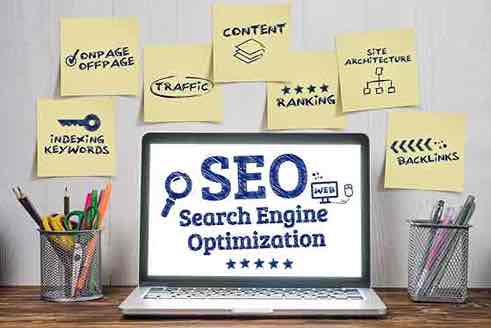
Search Engine Optimization (SEO): The technique involves on-page and off-page optimization. On-Page optimization deals with making a website seo friendly in terms of website load speed, mobile friendliness, etc. This optimization happens after keywords and competitor analysis have been investigated. Off-page optimization deals with creating a backlinks profile through placing the website on third-party websites.

Social Media Marketing: It is made up of organic posts and sponsored adverts on social media. Sponsored adverts are Pay Per Clicks adverts and work like Google Adwords. Organic posts refer to the content that gets posted on social media pages, personal account and groups.

The benefits of digital marketing are abundant, including increased brand recognition, better customer engagement, higher website traffic, and elevated conversion rates. In this digital age, the advantages of digital marketing are hard to ignore, and businesses that adopt this strategy are more likely to be ahead of their competitors.

Factors to consider for digital marketing:

1.    Understanding Your Target Audience With Research (A/B Testing)

Before diving into digital marketing, you must clearly identify and understand your target audience. Create detailed buyer personas to better grasp your audience’s demographics, behaviors, and pain points. It is about creating an audience profile, their living standards measure (LSM). This knowledge will guide your digital marketing strategies and ensure your efforts are well-targeted. Developing accurate buyer personas allows you to tailor your content and messaging to resonate with your audience’s specific needs and desires.

For instance, if you are marketing luxury fashion items, your content and branding should align with the tastes and aspirations of high-end consumers i.e. High LSM, while selling budget-friendly products would require an entirely different approach. By putting yourself in your customer’s shoes and understanding their pain points, you can create content and marketing campaigns that genuinely address their needs and increase engagement and conversions.

To employ effective digital marketing strategies, it is highly recommended to research what is effective and not. Trial and Error methodologies like A/B testing into mind. A/B testing, or split testing, involves comparing two versions of an ad or webpage to determine which performs better.

For example, if you are running a social media campaign, A/B testing can involve creating two different ad copies, one focusing on highlighting discounts and the other emphasizing product features. You can identify which version resonates more with your audience by monitoring metrics from analytics tools such as click-through rates and conversion rates. Adopting this data-driven approach allows you to optimize your digital ads for better performance based on user preferences. A/B testing provides actionable insights and allows you to make informed decisions that align with your target audience’s preferences, ultimately leading to more effective and efficient digital advertising campaigns.

Incorporating A/B testing into your digital advertising strategy is a simple process for beginners. You can begin by selecting a specific element you want to test, such as ad headlines, images, or calls-to-action (CTA). Next, create two variations of the same ad, with the only difference being the element you have chosen to test. Ensure that both versions are randomly distributed to your target audience. Monitor key performance indicators (KPIs) closely, comparing the results of each variation. This iterative process of experimentation allows you to understand what resonates with your audience and refine your digital advertising efforts accordingly.

By embracing A/B testing, beginners can gradually refine their strategies, ensuring that they reach their target audience and deliver content that truly resonates with them.

2.    Develop A Strong Online Presence With First impression

An effective landing page on your website is very important to growing your online presence. The website should load faster, easy to navigate and be mobile friendly. Also, it should reflect your corporate identity so that users can easily recognize your brand. The idea is to enable users to find what they want on your website much easier. A great tip would be to use attention-grabbing headlines and visuals that resonate with your target audience.

Also, we need to enable users to take the right action on the website. We do that by adding call-to-action (CTA) buttons, for example, “Get A Quote”, etc. This is good for generating leads and creating a pleasant experience for users.

A strong online presence can also be enhanced on social media. Research should be conducted on which social media platforms to use based on where your audience is. You need to be intentional and consistent with posting frequently. This creates trust from your users and strengthens the brand. part from your website,maintaining an active presence on every relevant social media platform is crucial in building a strong online presence. Updating social media profiles regularly helps build connections with audiences and showcase expertise.

3.    Content Marketing Is Very Important

Content plays a great role in giving your domain authority. So, creating high-quality content should be at the forefront of your digital marketing strategy.

Domain authority is a measure of how search engines see your brand. So, if you produce high quality content that is informative and engaging, search engines reward you by ranking your website highly.

Start by researching your audience’s pain points, needs, and interests. What questions are they asking? What problems can your product or service solve? Tailor your content to answer these questions, offer solutions, and provide valuable insights. Whether blog posts, videos, infographics, or podcasts, your content should aim to educate, entertain, and inspire your audience so that you may generate leads and increase the company’s profitability.

Moreover, consistency is key in content creation. Establish a content calendar to ensure a regular flow of posts and updates. This consistency keeps your audience engaged and signals to search engines that your website is active and relevant. Remember that content quality goes hand in hand with relevance, so keep your content updated and align it with your evolving business goals. Moreover, the content should be accompanied by high resolutions graphics, images, videos, etc. as graphics convey much information than text.

4.    Attract Clientele With Search Engine Optimization (SEO)

digital marketing agency johannesburg

Search Engine Optimization (SEO) is cheaper than Pay Per Clicks adverts. The whole idea is to rank higher in search engine results pages (SERPs) to increase chances of attracting more traffic. This is referred as organic online presence.

To get started with SEO, you must perform thorough keyword research to identify the terms and phrases your potential customers use to search for products or services like yours. These keywords will be the building blocks of your SEO strategy, guiding the optimization of your website content, meta tags, and more. Implementing on-page and off-page SEO techniques, such as creating quality backlinks and improving site speed, boosts your website’s visibility and drives organic traffic.

SEO is a long term technique and ongoing process. Google Analytics assists in measuring the success of digital marketing strategy as it provides important metrics. With time and dedication, SEO can become a foundational pillar of your digital marketing strategy, driving consistent, long-term results for your business.

5.    Social Media Marketing

With billions of users across various platforms, including Facebook, Instagram, Twitter, LinkedIn, and TikTok, social media offers a vast audience you can tap into. Choose the social media platforms that best suits your target audience and industry. Once established, maintain an active presence by regularly sharing engaging content, including social media posts, images, videos, and stories. Respond promptly to comments, messages, and interactions to foster a sense of trust among your followers. You can build lasting relationships and enhance brand loyalty by humanizing your brand and showing genuine interest in your audience.

In addition to organic engagement, social media advertising can significantly boost your online visibility. Platforms like Facebook Ads, Linkedin Ads, etc. provide powerful targeting options, allowing you to reach your ideal customers based on demographics, interests, and behaviours. Consider running paid advertising campaigns to expand your reach and drive specific actions, such as website visits, app installations, or product purchases. Sponsored Adverts are the most effective social media marketing tool.

Through organic and paid social media strategies, you can connect with your audience, showcase your products or services, and create an influential online presence that stands out in the crowded digital landscape.

Off-page optimization deals with increasing the domain rating of the website. This is done by placing your website on third party websites i.e. backlinks with high domain authority.

6.    Email Marketing

Email marketing remains a highly cost-effective way to nurture leads and maintain relationships with your existing customers. It lets you connect with your audience more personally, nurturing leads and retaining loyal customers. The first step is to build an email database, and you can do this by offering incentives such as ebooks, discounts, or newsletters in exchange for visitors’ email addresses. Once you have a list, segment it to send tailored messages to different groups of subscribers based on their interests and behaviours.

Creating compelling email content is essential to engaging your audience and encouraging them to take action. Craft subject lines that grab attention and content that provides real value. Whether promoting products, sharing industry insights, or delivering exclusive offers, your emails should be relevant and engaging. Additionally, use email marketing automation tools to schedule emails and track open rates, click-through rates, and conversion rates. This data will help you refine your email marketing strategy over time, making it more effective and efficient in reaching your goals.

7.    Pay-Per-Click (PPC) Advertising

Pay-per-click (PPC) advertising is a paid digital marketing method that puts your ads right at the top of search results or on websites and social media. Platforms like Google Ads and Facebook Ads are the most well-known for running PPC campaigns. The beauty of PPC lies in its precision and cost-effectiveness, as you have complete control over your budget and can target specific demographics, keywords, and locations. Careful keyword research, compelling ad copy, and continuous monitoring are essential for success. By analyzing performance metrics and adjusting your campaigns over time, you can optimize your return on investment (ROI) and generate a steady stream of potential customers. This falls under campaigns management

In PPC advertising, you only pay when someone clicks on your ad, making it a relatively cost-effective way to reach your target audience. But remember that competition can drive up costs, and poorly managed campaigns can drain your budget quickly. Testing and refining your ad creatives, landing pages, and targeting parameters is crucial to maximize your ROI. Whether promoting a product, service, or a specific landing page, PPC advertising can be a powerful tool in your digital marketing arsenal when wielded correctly.

8.    Analyze Data Dashboards And Adjust Your Strategies

To continually improve your digital marketing efforts, it’s important to measure and analyze your results. Platforms like Google Analytics and Facebook Ads Manager provide user-friendly interfaces that break down key metrics, allowing you to gauge the effectiveness of your campaigns and organic marketing. These dashboards assist in best understanding your audience demographics, engagement rates, and conversion data. By regularly assessing this information, you can identify trends and areas for improvement, and refine strategies for better outcomes.

Understanding price points is another critical aspect for those venturing into digital advertising. Analyzing the cost per click (CPC), cost per mille (CPM), or cost per acquisition (CPA) helps optimize budget allocation and ensure efficient use of resources. You should experiment with different budgets and monitor performance to find the sweet spot that aligns with your goals.

9.    On-Page Optimization

Mobile responsiveness play a major role in on-page optimization. In an era where smartphones and tablets have become integral parts of our daily lives, mobile optimization is a non-negotiable aspect of any flourishing digital marketing strategy. Ensuring that your website and content are mobile-friendly creates a pleasant experience for your users.

Mobile optimization goes beyond responsive design, extending to your website’s performance and load times. With mobile users often having limited bandwidth and processing power compared to desktop users, optimizing your site for quick loading and smooth functionality on mobile devices is vital. Slow-loading pages can frustrate visitors and increase bounce rates, harming your digital marketing efforts. Therefore, compress images, minimize unnecessary scripts, and optimize the overall code to ensure your website loads swiftly on mobile devices. This enhances the user experience and contributes to your site’s overall SEO health, as search engines consider page speed as a ranking factor.

Mobile optimization is necessary for any digital marketing campaign, ensuring that you provide a user-friendly, efficient, and accessible experience to the ever-growing mobile audience.

To Sum Up:

Ultimately, the essence of successful digital marketing lies in understanding your audience, providing value, and fostering authentic connections. You can craft a robust, results-oriented digital marketing strategy by leveraging tools like SEO, Yoast, Site Kit, Social Media, Quality Content, etc. Keep testing, optimizing, and innovating to reach your digital marketing goals. You can succeed in this dynamic industry with hard work, consistency, and a willingness to adapt.

Best Practices For SEO

SEO Packages South Africa

The main objective of Search Engine Optimization (SEO Packages South Africa) is to have a website ranking highly on search engines like Google, etc. This methodology is divided into two, which is, onpage optimization and offpage. Onpage optimization looks into the effectiveness of the website, and considers factors like mobile responsiveness, load speed, etc. Whereas offpage optimization considers the website’s activities outside i.e. mentioning of your website by other websites so that it earns authority from search engines.

Why is SEO very important?

SEO offers great benefits and can determine whether the company is sustainable or not. Imagine your website being discovered by many users on Google, how would that look on your ROI.

  • Increased credibility  SEO-friendly website will help build the company’s credibility, as users typically see the top search result as the authority in the niche.
  • Improved user experience – Google and other search engines see user experience as one of the most important ranking factors. As a result, an SEO-friendly web design improves overall user satisfaction.
  • Reduced costs – SEO is a cost-effective way to generate leads and sales. It is more cost effective than Pay Per Clicks campaigns. And, it is not constraint by budget resources.
  • Increased traffic – SEO-friendly websites have the potential to rank higher in search engine results and drive more traffic, as the websites appearing on Google First Page gets more visibility.

Best SEO Packages South Africa

How to come up with best Onpage Optimization 

seo packages South Africa


It takes some time to get the website in line with search engine guidelines. Hence, SEO is an ongoing process that impacts rankings after some time.

Let’s look at some onpage work that could be done:

  1. Usage of Keywords

Writing SEO-friendly content is critical to improving your website’s position on search engine result pages (SERPs).

When creating a blog post, incorporate relevant keywords to help search engines recognize what your website is about. You can get them by conducting keyword research. The research looks at the volume of searches per keyword per month. Also, checking what your competitors are ranked for, can assist in deciding which keywords to invest your energies to.

Search your main keyword on the search engine, and you will find other related terms in the results.

  1. Use Header Tags

 To assist search engines see what the pages are about, you should use header tags properly. They are HTML elements that give structure and meaning to a web page’s content, helping search engines understand its contents.

Header tags consist of <h1> to <h6> HTML elements. We focus on your <h1> and <h2> tags since they are commonly used for the content’s title and headings. List your keywords and include them in these tags accordingly.

Try to also include relevant SEO keywords to other headers once you optimize all the <h1> tags. Apply this method consistently whenever you publish content to improve your SEO rankings. Also, use SEO tools like Ahrefs, etc. to check the SEO score before indexing it.

As a result, search engine crawlers will know that this page contains content related to those terms and be able to accurately index your site for relevant content. This will improve your page ranking on the SERPs, enabling you to reach the right audience.

  1. Include Keyword-Rich Anchor Text in Your Links.

 This is what we refer as internal links. Anchor texts are clickable words that take users to another page or section of the website when clicked. Adding SEO-friendly anchor texts allows search engines to understand the content better and rank it higher. Preferably, you want to have the main keyword(s) with the anchor text in the beginning of the page, to give a search engine an idea of what the page is about.

When creating an SEO-friendly anchor text, you should focus on the keywords that relate to your website.

Think of words or phrases relevant to the content and best explain what it links to. For example, if you’re linking to a page about SEO tips, use anchor text such as Learn SEO tips or SEO strategies.

Remember, SEO-friendly anchor texts should be relevant to the linked page and give search engines an idea of what the content is about. It’s also important to avoid keyword stuffing in your anchor text, as this could negatively impact the website’s SEO score.

  1. Make Sure the Website Is Mobile-Friendly

Apart from SEO benefits, mobile friendly website makes users stay longer and make their experience enjoyable.

Making an SEO-friendly website involves more than optimizing the content – it also includes building layouts, etc that are mobile friendly.

As a lot of users access their website on mobiles. Google and other search engines consider a website’s mobile-friendliness as an important factor in ranking search results.

Because of that, your website should be able to load quickly on mobile devices. Ensure your website’s design is responsive, which means it can adjust to different screen sizes.

Fortunately, most ready-to-use themes for WordPress or other website platforms come with a mobile version.

Don’t forget to use tools  to check if your site is up to the current standards.

  1. Optimizing Images

 Optimized small images load faster on the website and contribute immensely on SEO as mentioned above. Optimizing Images for SEO is a great way to improve the visibility of your website in search engines. You can take several steps to ensure that your images are SEO-friendly and help boost your SEO performance.

Make sure that you give each image an appropriate file name. It should include keywords related to the content of the image. This will help search engines identify the image’s content, which can lead to better visibility on the SERPs.

Reduce the size of your images before you upload them to your website. Larger file sizes can slow your page down, negatively affecting SEO performance.

Additionally, don’t forget to add alternative text for each image. Alt text is a piece of HTML code that describes the image’s content and will appear if an image fails to load properly.

Adding this information helps search engines recognize the context within images, improving your SEO performance.

Finally, consider adding short captions in description fields under your images. Doing so can also give more context to the images, which improves SEO rankings.

  1. Make Sure Your Web Pages Load Fast

 Factors to consider for fast load speed of pages include:

  • Reduce server response time by optimizing HTTP requests.
  • Compress images and other media files, reducing their size while maintaining quality.
  • Leverage browser caching to store frequently accessed files locally in each user’s browser instead of downloading them every time.
  • Get a better web hosting plan with higher bandwidth.

You use tools to check if your site meets the standard load speed and get various insights on how you can improve its loading speed.

  1. Use Google Tools

 Google Search Console and Google Analytics are very important in meeting your SEO objectives. Google Search Console enables websites owners to submit their website pages so that Google can index them. It check where the page is live and indexable. It also checks other factors like internal links, etc.

On the other hand, Google Analytics records users who have seen the website and click on it, where they come from, and what medium they used to access the website, etc.

These tools are free of charge and we can assist you on setting them up.

  1. Technical Elements of the Website

 Your website consists of numerous lines of code that run various functions. These lines of code can become unorganized and hinder one another as you grow your website. To prevent this, we recommend cleaning them up when necessary. If you use Content Management Services you need to update the softwares, plugins, themes, etc. regularly.

This process can also help the search engine indexing process and make your site load faster. These two factors are the key elements that highly affect your website’s SEO performance.

Website code may cover different types of programming languages. The three most common ones are HTML, CSS, and JavaScript. Each of these languages is organized differently.

  1. Add Internal Links

 Internal linking is a process of adding hyperlinks within your content to other pages or posts on your website. This creates a web of interlinked content and helps search engines recognize the structure and relevance of each page.

You can add an internal link to elements like text, images, or buttons.

Consider the relevancy of each page and post you want to connect to ensure your internal links are effective. Put links on anchor texts that fit the appropriate context of the target pages to help smoothen the indexing process.

Strategic internal linking can also help reduce bounce rates. Visitors can find the right content and navigate the site more easily. Linking related other content on your blog posts also encourages visitors to explore and engage with your website more. This makes users stay longer on the website and visit many other pages.

However, be careful not to overdo it. Inserting too many internal links can make your content look messy and negatively impact user experience.

  • Optimize the Title Tags and Meta Descriptions

 To make search engines understand the content better, meta descriptions and title tags need to be defined. Title tags and meta descriptions are HTML elements that give context to a page’s content. A title tag appears on the search engine result as clickable headlines, while a meta description offers short snippets about what readers can expect to find on the page.

While working on a title tag, ensure it includes the content’s focus keyword. Typically, it should align with the target audience’s search intent, helping your content appear on the right search result.

Try to write a compelling copy for your meta description and show that your content provides value to the potential reader.

  • Update Your Content Regularly

 Creating new content and updating old content regularly is a great SEO strategy.  Make sure you create content that fits the current issue to keep your target audience interested.

Don’t forget that implementing good SEO strategies is not enough if you don’t provide useful information to your visitors. Make sure to write good website content that brings value to your audience and helps build your brand reputation.

  • Backlinks

 Backlinks are links directed towards a website from other websites. They are commonly referred to as inbound links. Backlinks are essential for search engine optimization (SEO) because they act like a vote of confidence for a website. A more significant number of high-quality backlinks makes ranking well on search engines.

In Brief:

A combination of onpage and offpage optimization yield great results. And, it requires constant investment in terms of time and effort. Results are not instant, but SEO is medium to long term strategy. To get instant results, you may consider Pay-Per-Click strategies like Google Adwords or Social Media Sponsored Adverts.


CALL ME
+
Call me!
5-Star Ratings