R1,200.00
Includes:
| 3 Designs | |
| Timeline: 3 Working Days |
Professional Business Logo Design
An excellent business logo design should visually represent your company. It is often used as a symbol to identify the company and its products or services. At the core of branding, a logo is a graphic representation that transcends the boundaries of language and culture. It represents the values of the company and the most important part of corporate identity.
Cost Effective Business Logo Design

The benefits of a professional logo design include creating a strong first impression, establishing a unique brand identity, fostering recognition and memorability, building credibility and trust, differentiating a business from competitors, and cultivating customer loyalty. A well-designed logo also serves as the foundation for all marketing materials, ensuring a consistent and professional brand image across various platforms.
Description
Artificial Intelligence in Logo Design
AI can be very useful in logo design, especially for speeding up idea generation and helping you explore styles quickly.
Here’s a simple breakdown:
What AI is good at in logo design
- Brainstorming concepts – generates many visual directions fast
- Style exploration – modern, minimal, luxury, playful, tech, etc.
- Color and shape ideas – suggests palettes, icons, typography moods
- Variations – creates multiple options from one concept
- Mockups – shows how a logo might look on packaging, websites, or signage
What AI is not as strong at
- Deep brand strategy – understanding your market, audience, and positioning
- Originality guarantees – AI outputs can feel generic if not guided well
- Trademark safety – generated logos still need legal checks
- Fine design judgment – spacing, balance, and brand nuance often still need a human designer
That’s where we come in, with our expertise and experience.
Best way to use AI for logos
Use AI as a creative partner, not the final decision-maker:
- Define your brand personality
- Generate several concept directions
- Pick one strong route
- Refine it manually for uniqueness and polish
- Check trademark and usability across sizes/backgrounds
Different Kinds of Logos and Tools:
Logos are essential visual assets that communicate a brand’s identity, values, and personality at a glance. The main kinds of logos include wordmarks, which use stylized brand names; lettermarks or monograms, which rely on initials; brandmarks or pictorial marks, which use a symbol or icon; abstract marks, which represent a brand through non-literal shapes; combination marks, which blend text and symbols; mascots, which use illustrated characters; and emblems, which place text and imagery within a badge-like form. Each type serves a different purpose depending on the brand’s name recognition, target audience, and intended applications across print and digital media.
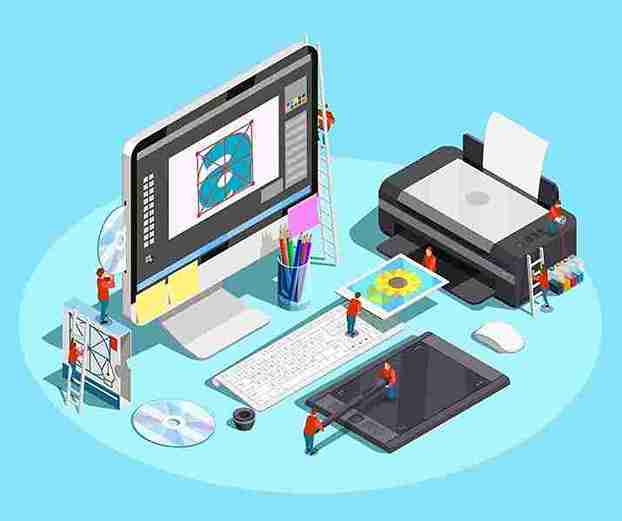
Logo design is typically created using vector-based and digital design tools that support precision, scalability, and creative flexibility. Industry-standard tools include Adobe Illustrator for professional vector design, CorelDRAW for illustration and layout work, and Affinity Designer as a cost-effective professional alternative. User-friendly platforms such as Canva and Figma are often used for quick concept development and collaborative branding work, while open-source tools like Inkscape provide accessible options for beginners and small businesses. In practice, the choice of tool depends on project complexity, budget, collaboration needs, and whether the final logo must scale cleanly across different formats and sizes.
In summary, selecting the right type of logo and the appropriate design tool is a strategic branding decision. A well-designed logo should be memorable, versatile, and aligned with the brand’s long-term positioning, while the design software should enable efficient creation, refinement, and adaptation across all communication channels.